Showing posts with label pakistan. Show all posts

Friday, December 16, 2011

Good news from the flood front in Pakistan

Pakistan (MNN) ― Flooding in Pakistan affected over 5.4 million people in the early autumn of 2011. The rain may have died down a while ago, but recovery is far from over.

Operation Mobilization has had teams working hard in Pakistan for years. They responded to the generous flooding in 2010 and have been responding to this year's crisis as well. Despite the extremely hard work that goes into the relief, the OM teams have been making significant progress.

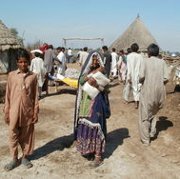
The absence of rain has helped in numerous ways. Due to houses collapsing and flooded land, people were moved, many to live temporarily by the roadside in makeshift shelters. But OM reports that now 60% of the people have returned home to prepare their lands for crops where the water has gone down, and to attempt to rebuild their houses.

The fact that homes are no longer empty has no doubt made work easier for OM teams, which have been entering villages to help with numerous small projects.

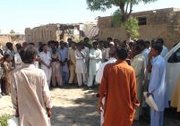
The work OM teams are doing is widespread. An opening ceremony was recently held to celebrate the successful installation of a hand pump at a school. On a slightly smaller but still important scale, team members were also able to distribute "jompy" water boilers this week, which will help kill unhealthy germs and also save fuel for villagers boiling water.

The teams have already distributed food, mosquito nets, and medicine for animals. Now they are holding six medical camps in different locations. 368 people have received checkups, and basic medicine has been provided in three different locations so far. The aim is for these camps to help particularly poor people to recover. Winter distribution of essentials like blankets is planned as the weather gets colder. Rebuilding work on damaged houses is set to begin in January.

Throughout their work, OM has been able to visit many different tribes, particularly Hindus. Watching the teams' care through relief activities has made individuals increasingly more open to listen to the Gospel, OM reports.

Work is far from over in Pakistan recovery efforts, but the Lord is using OM every step of the way. To learn more about OM Pakistan, click here.

Wednesday, October 19, 2011

OM assesses Pakistan flood damage, responds

Mission Network News: "Pakistan (MNN) ― In 2010, flooding affected tens of millions of people across Pakistan. Scores lost their homes and were forced to relocate. After monsoon rains this year, the Pakistani people are left submerged once again."

Read more...

Tuesday, August 9, 2011

Many of Pakistan’s Christian Flood Victims Still Homeless


Government said to allot land only to Muslims in southern Punjab Province.
By Murad Khan 

LAHORE, Pakistan, August 9 (Compass Direct News) – Many Christians living in the southern belt of Pakistan’s Punjab Province who lost their houses in last year’s floods remain homeless despite a plan by the Punjab government to allocate land to residents in the area, area Christians said.

Hameed Masih, a resident of Kot Addu in Muzaffargarh district, said the provincial government has not set a quota for granting of land to members of minority communities left homeless by the devastating floods that began in late July 2010.

The government has begun four plans in Kot Addu under which around 435 plots of fivemarlas (151 square yards) each were to be distributed among people who lost their property. Several people were allotted land last month, but so far no minority member has been given land, he said.

“Christians in this area are not rich people,” Masih said. “They lost their houses and lands in the floods and should have been given a 5 percent quota in the scheme. Flood victims could have been easily accommodated, but the quota system has not been followed, and thus no minority member has been allotted land.”

Aid distribution was also initially unfair, he said.

“There were some problems in the beginning, but then minority members protested and the issue was resolved,” he said.

Masih added that Christian families in his village are receiving monthly stipends from the government.

The list of homeless people was prepared by local land revenue officers who did not do so fairly, said another Christian. Sarwar Masih said he does not have property and does menial work for a living, but his name was not included in the list by the land revenue officers, orpatwaris.

“Patwaris had to refer our names to higher authorities, but the names of those who could not ‘make them happy’ were not included in the list,” he said. “My name was not in the list, so I had no hope of getting land, though being homeless I fulfill the criteria.”

Areas where plots have been allotted include Gurmani Sharki, Jandeer Dueaja, Chak 568 and Chowk Sarwar Shaheed. There are some 8,500 registered minority voters, mostly Christians and Hindus, in these areas, with the total minority population said to be around 18,000.

“Several people who have been allotted plots under this scheme already have plenty of resources and land, while those who do not have property have been ignored,” said a Christian identified only as Wasim, who is minorities coordinator of Kot Addu.

He added that one person who owns 22 acres of agricultural land has been allotted more land under the government rehabilitation plan.

Napoleon Qayyum, a minority rights activist and leader of the Minorities Wing of the Pakistan People’s Party, said that under Pakistan’s constitution, minorities should be given a 5 percent quota in all government plans. He added that the Punjab government should adhere to that quota as well.

Officials from the local administration responded to the allegations by saying they did not directly handle flood rehabilitation, adding that plots were allotted to homeless people through a lottery draw.

Chaudhry Ehsanul Haq Nolatia, a local Member of the Provincial Assembly from Kot Addu, said a committee was formed to look into the allotment.

“It is true that the government did not allocate any special quota for minorities in the scheme, but the plots were distributed through a draw,” he said.

He added that he would take up the issue in the Punjab Assembly.

Flooding from monsoon rains affected the Punjab, Sindh, Khyber Pakhtunkhwa and Balochistan regions and the Indus River basin, submerging about one-fifth of Pakistan’s land. Close to 2,000 people died, and some 20 million people lost their livelihood, property or other infrastructure in the flooding.

END

Monday, August 8, 2011

Pakistan: Peace & Reconciliation Ministries has been established to Create Christian-Muslim Friendship

By Ashfaq Fateh
Special to ASSIST News Service


SAHIWAL, PAKISTAN (ANS) -- In a bid to end persecution and discrimination and also to promote Christian-Muslim dialogue, a new organization called Peace & Reconciliation Ministries Pakistan (PRMP) has been established (http://www.wix.com/prmpak/ministries).

Christians protesters with their important message


To find out more, ANS-Pakistan interviewed Mr. Stephen John, Executive Director PRMP, to find out more and discover what he hopes to achieve through it.

Mr. John told, ANS, "It has been observed that violence against Christians is increasing day by day. They are often accused of blasphemy and killed before they can prove their innocence in the courts.

"Forced conversions and marriages are taking place and also the five percent quota for religious minorities in jobs and civil services is not implemented in many of the provinces of Pakistan."

Mr. John said that the murder of Shahbaz Bhatti, the only Christian cabinet murder, earlier this year, showed the situation in the country was continued to get worse for minorities and Christians in particular.
He revealed that Christian human rights workers, social workers and those involved in women's developments, have recently met in the Punjab city of Sahiwal, Pakistan, to discuss the present situation and how to respond to it.

"These Christian leaders from various cities shared their stories and issues faced by Christians in their areas and how these affect them," John told ANS-Pakistan.

Mr. Stephen John


He went to say, "The leaders reached a conclusion that there are a small numbers of outlaws in Pakistan who try to destabilize peace here. Unfortunately, although they are small, these forces are strong and they can easily trap and misuse the common Muslim who is peaceful, tolerant and open in normal situation. Unfortunately, over the past three decades these forces have not been curbed by our state departments and they have gained more and more power and strengthened their network.

He went on to say that the leaders discussed examples of normally peaceful cities like Faisalabad and Gojra where violence broke out. "It showed how in these cities, a few outlaws could create law and order situations and took of lives of poor Christians in Gojra violence in 2009 and also the Emmanuel Brothers in 2010, who were gunned down as they left a court in Faisalabad," he said.

Mr. John said that the survival and livelihood of Christians is "linked" with their Muslim brothers and sisters, as well, in many cases, their livelihood as they work for them and in many cases the Muslims trust their Christian workers.

He told ANS, he heard an interview with well-known lawmaker Senator S.M. Zafar on Geo TV when he said that he always trusts and prefers Christian people to work with for "their honesty, hard work and sincerity to their employer."

ANS asked Mr. Stephen John about the objectives of PRMP, he replied, "PRMP has been formed to create an enabling environment for Christians to grow peacefully having reconciliation with Muslims. PRMP will organize programs to foster Christian-Muslim cooperation and will spread a message of peace and reconciliation.
"The basic idea is to make Christians understand that isolation will not help. Interaction between Christians and Muslims will give an opportunity to promote peace and reconciliation."

Mr. Stephen told ANS, "PRMP saw not only Christians face forms of violence, persecution and poverty but millions of Muslims also become prey. For instance, poor Muslim workers are not fairly paid, health care, education and other social services are also out of the reach of Muslims like Christians in Pakistan.

Mr. Stephen revealed that PRMP has decided to set up subsidized Ramadan Bazaars for poor Muslim brothers and sisters. Asked why these bazaars from Christians and how would it work? He replied, "In the western world during Christmas season, food clothing and variety of services are provided on discounted rates.

However, on the contrary, in Pakistan, the black marketers, traders and shopkeepers sell basic necessities of life on more than double rates. Unfortunately, the government fails to stop these practices resultantly poor Muslims suffer. It has been reported that, due to these price hike's, there have been poor people commit suicide.

"PRMP has planned to set up these subsidized bazaars where 1,000 Muslim families would be provided with sugar, rice, tea, cooking oil, lentils, onions, potato, pepper, spices, bath soaps and washing powder on subsidized rates rather than open and government-based utility and model bazaars," he said. "However, we will not give a subsidy on wheat flour as the government of the Punjab is already doing that.

"When the Muslim families purchase these items from their Christian brothers and sisters, it will create good impact at least many thousand people directly. It will also help to change the mindset of Muslims when they realize that Christians love them and respect their faith. We are hoping that our national and also international media as well as opinion-makers, will positively welcome this gesture of goodwill."

Mr. Stephen then told ANS, "This ministry has launched an appeal to the international Christian community, including churches, and ministries, that they would donate funds for this noble cause which strengthen friendship and acceptance of the Christian community in Pakistani society."

Peace & Reconciliation Ministries Pakistan's headquarters is in Sahiwal and can be reached at prmpak@gmail.com


Ashfaq Fateh, 38, studied civic and human rights, at Pakistan's leading University, the Aga Khan University in Karachi. He has been working to promote peace, human rights and particularly for Christian's rights. He has also been working against the discriminatory laws prevailing in Pakistan. His wife, Rafia Salomi, is serving as deputy director for Society for Human Development, popularly known as Human Development Center, an icon of Christian's rights in Pakistan since 1984.


Friday, July 22, 2011

Pakistan flood victims still struggling

(Photo courtesy of Southern Baptist
 International Mission Board)

Pakistan (BGR/MNN) ―Humanitarian aid groups estimate that around 12 million Pakistanis are still trying to rebuild their lives a year after floods devastated the country.

Pakistan experienced its worst flooding in 80 years last August. In the Shikarpur district of Sindh province, thousands of homes were destroyed and more than half a million people were forced out of their villages.
Southern Baptists responded to the need through a partnership with Shikarpur Christian Hospital.

Teams of doctors have been providing medical care from the hospital. The facility has earned a good reputation in the upper Sindh province since the early 1960s. The Hortons direct the project in South and Central Asia for Baptist Global Response in the love of Christ and in His name.

However, after the flood, which affected 20 million people throughout the country, the hospital staff realized they couldn't help everyone. They decided to focus on one specific area of need -- the malnourished children of the flood-affected families.

These children's families depended on the land for their survival and had no way to make a living after the floods washed away their crops. As field laborers, they were already very poor and had limited access to health care.

Doctors and nurses used 43 mobile medical camps to reach out to flood victims in 14 new villages. Teams also spent time talking to patients and making follow-up visits.

Because Southern Baptists give to their World Hunger Fund, people in Pakistan affected by the flood and who can't afford medical care are getting the help they need, says Francis Horton.

With the funds, the hospital has treated 131 children and their mothers with problems like tuberculosis, malaria, intestinal parasites and upper respiratory infections. The team also provided antibiotics, vitamins, iron supplements, anti-tuberculosis therapy, anti-worm medicines, anti-malarials, antipyretics, oral rehydration solution and antifungal creams to over 3700 people.

BGR and its partners have been the hands and feet of Christ, responding to critical needs in the region.  As a result, doors are opening for the hope of the Gospel. Keep praying that God will use BGR to provide both physical and spiritual help.