Showing posts with label drought. Show all posts

Thursday, December 8, 2011

Drought effects in Isiolo call for response

Kenya (MNN) ― The drought in the Horn of Africa struck several countries hard, leaving millions dead, displaced, or starving in its wake.

Considering the severity of famine in many countries, the blow to Kenya wasn't quite so fatal. But in Isiolo, a northern region of Kenya near the Somali border, the people suffered--and continue to suffer.

"Isiolo, where the majority of our ministry is, is very dry," says Sonji Pass with The Mission Society. "It's unusual for it to rain. Typically, they're always in a drought situation."

This summer's severe lack of rain just heightened an already-existing problem, which has caused extreme despair in the region.
"The lack of water, of course, causes health issues with the children and the women," notes Pass. "The lack of water makes it pretty much impossible for them to grow their own food naturally, so there's a lot of starvation."

The region is also ridden with HIV/AIDS cases. Medical dilemmas plague many. People are becoming desperate for hope.

These extreme circumstances are making the present a better time than ever to share the Gospel, says Pass. "I think they are so absolutely ready. I think it's prime time for this particular area."

The Mission Society is already stepping in. Pass says they have drilled a borehole on a church property in the area to help provide clean water. This water source not only provides safe drinking water, but it provides Gospel opportunities.
On Sundays, the borehole is not open to people until after church, motivating many to stick around for church services until they can collect their water. During other times of the week, people can gather water freely, but church elders are often nearby to strike up conversation and build relationships.

As Pass heads back to Kenya in February, she says she and her counterpart, Sonia Crawley, will focus a great deal on village infrastructure. They'll embark on more clean water initiatives and other socio-economic projects. They will also organize medical clinics, in which people learn about the Gospel via a pictorial evangecube. Numerous souls have been saved while waiting for medical treatment and looking at an evangecube in the past.

The small missions team asks for prayer as they work to build relationships, help improve quality of life on earth, and share the hope of eternal life with some of Kenya's most desperate. Pass asks for prayer that the team has favor with the nationals and gains a strong support and prayer base in the West.

Pass and Crawley are also working on missions mobilization. Many more missionaries are needed in Kenya. To explore The Mission Society's work there, click here or e-mail the team at kenyabelieveit2011@gmail.com. 

Monday, November 7, 2011

Famine horrors far from over in East Africa

East Africa (MNN) ― Months later, famine continues to grip as many as 13 million people in the Horn of Africa.
Many were hopeful that the promise of rain would soothe the dry earth. However, the rains that have come may have done more harm than good so far. According to Voice of America News and the UN refugee agency, heavy rains have flooded parts of Somalia, Kenya, and Ethiopia.

The flooding has caused severe safety hazards for affected refugee camps. Some refugees have been fleeing the refugee camps to find safer places.

In regions where rain has yet to come, rain is unlikely to help either. Duane Zook with Global Aid Network (GAiN) says rain might provide a little relief, but mostly it will increase the likelihood of disease--especially with hundreds of thousands of people living under makeshift tents built of sticks and cloth.

Zook just returned from East Africa, stunned by what he saw. "The situation in the Horn of Africa is horrible. When I went in there and saw some of the refugee camps and the IDP camps, the pictures I had seen and the stories I had heard really came to life."

Zook says the famine is far from over. Close to a million children under the age of five are severely malnourished. There is a dire "need for food, for clean water. Thousands of children are dying every week, and people need hope."

GAiN has been sent a significant amount of aid. "We have shipped about 15 containers: that's close to four million meals. But that's a drop in the bucket of what is needed," says Zook.

After seeing the horrors of famine and starvation, Zook was encouraged by two things: people have, in fact, noticed the love of Christ, and GAiN is there to stay.

Zook says famine victims frequently asked, "Many people from the West come, and they look at the need, but then we never see them again. Are you going to be any different?" Zook was able to encourage them that GAiN would continue to provide.

GAiN's ongoing presence is not only helpful to those who may otherwise starve, but the consistency also opens more doors for the Gospel.

Providing "food, water filters and water wells help build relationships. Relationships help us build trust, and then trust gives us opportunity to provide hope," says Zook.

GAiN is interested in providing physical aid as well as spiritual nourishment. Pray for more opportunities to do so.
Many around the world may have forgotten about this famine, but its victims still have years of struggling ahead of them. Be a part of bringing them physical relief and spiritual guidance through GAiN. It's only $0.10 to supply a meal for someone in East Africa. Click here to give. 

Tuesday, October 25, 2011

Drought aid and rains send relief to Horn of Africa

Mission Network News: "Kenya (MNN) ― More than 13 million people are currently threatened by the effects of drought in the Horn of Africa The drought has driven up food prices and weakened livestock, thus increasing malnutrition, hunger, and famine."

Thursday, September 22, 2011

Rainy season not enough to bring relief in Kenya

Mission Network News:


Kenya (MNN) ― Rainy season is coming in the Horn of Africa.
This year's forecast is a mixed bag of news. The good news: expect above-average rains in drought-stricken areas.

Wednesday, September 7, 2011

Effects of famine stretch far further than hunger


East Africa (MNN) ― The East Africa famine has already cost hundreds of thousands of people their lives. Numbers range from 12 to 13 million who have been "affected" by the disaster.

But the consequences of such a wide-scale crisis go much deeper than just starvation or even death. While it is easy to believe that things will settle down once the food situation gets back to normal, Pat Melancon with Baptist Global Response says the damage done by this catastrophe will far outlast today's hunger.

"The side effects are just astronomical, and they don't go away once people have food in their stomachs," Melancon, Managing Director of Disaster Response and Training for BGR, tells Mission Network News. "Some of the long-term side effects can be devastating, I think, to a community for probably a decade or more."

The list of "side effects" is miles long. Entire nations will be rearranged by the end of the crisis.

For one thing, notes Melancon, there has been a massive migration of people within the affected nations. People have left their homes to find food, but even those in "food secure" areas are moving to areas with no food security when they hear that organizations are handing out meals elsewhere.

When people choose to migrate, their land is often seized by others. This, says Melancon, results in a loss of livelihood. People who, up until the crisis, had been pastoral herders or agriculturists suddenly have no land with which to continue their work. On top of that, there has been a significant loss of livestock in drought-affected areas, robbing pastoralists, in particular, of their livelihood.

Those losses encompass entire families, who also will have to struggle with the loss of family members, and, indeed, entire generations.

"Even if you could go back to a perfect situation, where they're back in their home environment, they still have their land and still have their livelihood," notes Melancon, "in many cases, they've lost two generations of people: the older generation who were there to teach the younger generation how to live off the land; and the younger generation who should be coming up to learn from those in that middle age group, and who have actually lived through it."

Many children who have survived have lost their opportunity for education--a way to a better life. Melancon reports as high as 80% drop out rates in available education venues since the famine struck.

Children, in particular, are at an even higher risk now of inhumane treatment. "People begin to resort to things that are going to enable them to survive," Melancon explains. "So you'll have an increase in the amount of prostitution. You'll have an increase in the amount of trafficking of children. You'll have an increase in the number of child soldiers. When you have children who are starving and you offer them food if they're willing to join your ranks, then it increases the number of children that are available."

Add to that the economic troubles that nations are sure to face as a result of aid relief and migrations. Without Christ, the situation is utterly hopeless.

BGR knows the Truth, though, and is working tirelessly to share it with those suffering in these nations. Currently, BGR is focusing on addressing the immediate need of hunger, but the ministry has been developing self-sustaining programs in that part of the world for 40 years. In the days, months, and years to come, BGR will work to create more of these programs, while spreading the message of Christ--the only One who can truly redeem such a tragic situation.

Melancon encourages you to do the same. "The way that Christians can get involved is, of course, to look at what the needs truly are, and then try either to contribute to or participate in projects that will address the needs that are there right now--but in such a way that it will allow the people to be self-sustained."

In the meantime, pray. Pray for access--which can be difficult in a complex crisis and in nations that have warring factions--for BGR. Pray for safety for distribution workers, who face more danger from desperate people than do even UN peace keepers. And most importantly, pray that Christian workers can effectively share Christ's love in word and deed with people who need that message of hope now more than ever.

If you would like to give to this crisis through BGR, visitwww.baptistglobalresponse.com.

Thursday, August 25, 2011

Famine impacts hospital ministry


Kenya (MNN) ― The famine in the Horne of Africa is having an effect on just about every facet of ministry.

CURE International runs hospitals in Ethiopia and Kenya. Vice President of CURE Joel Worrall says, "When a food shortage occurs in a country like that, everything costs more -- food prices have gone up, fuel prices cost more, which impacts our patients ability to get to our facility as well as our abilities to cover the cost of energy."

Food may be the biggest issue. In most 3rd world nations, family and friends are responsible for feeding patients.

However, at CURE Hospitals, not only are the patients fed, so are their family members. 

CURE is taking action. "We end up having to make all sorts of contingency plans about what the impact's going to be on the budget of those hospitals and then how that going to affect other parts of our work in Africa."

CURE cares for disabled children. Worrall says it makes ministry even more profound. "In the developing world the family that has a disabled child has lots and lots of strikes against them. And, the child obviously does as well. Worrall continues, "People who are abjectly poor, are even poorer. We're dealing with an even greater sense of despair and abandonment and these feelings of, 'where is God in their circumstance.'"

Opening doors to share the Gospel. CURE is helping answer these questions Worrall says, by "being able to provide a location, we're meeting their physical needs at that time, and also giving them an opportunity to be either introduced to

Jesus or refreshed spiritually."

Sponsor a surgery. Click here to help.

Tuesday, August 23, 2011

World Hunger Fund far too low for famine


East Africa (MNN) ― Funding for the Southern Baptist World Hunger Fund is at its lowest in 20 years.
Current funding will only cover the next six months of feeding projects.

The financial drought couldn't have come at a more desperate time. Millions are on the brink of starvation in the Horn of Africa, and tens of thousands of lives have already been lost. Christians want to save these hungry people physically and spiritually but can't if funding for already existing projects is already depleted.

As two consecutive years of zero rainfall have caused severe famine in East Africa, two consecutive years of financial droughts have plagued the World Hunger Fund, making it difficult for Southern Baptists to respond to the crisis.

The "red alert" crisis in the World Hunger Fund has emerged, just as giving to the World Hunger Fund has sharply declined, reports the International Mission Board. The overseas portion of the hunger relief fund is down to $4.1 million--enough to meet the needs of Southern Baptist international hunger projects for just six months, without considering response to the Africa crisis.

$4.3 million was donated to the World Hunger Fund in 2010--only 40% of what was given during a 12-month span a decade earlier, and the lowest donations to the fund have been in 20 years.

Still, the International Mission Board reports that Southern Baptist famine relief efforts are gearing up in the Horn of Africa regardless.

"We are delighted to report that one feeding site is operating, and assessments are in process in two other locations," says Jeff Palmer with Baptist Global Response. "We are going places that few other organizations can go, and we are able to do this in a large part due to the generosity of Southern Baptists and their contributions to the World Hunger Fund."

Getting projects underway has been a real challenge for even the largest humanitarian groups in a crisis that has hit Djibouti, Ethiopia, Kenya, South Sudan, Sudan, Uganda and Somalia. Support for the efforts BGR is making, however, is beginning to mobilize through the posting of a downloadable multimedia slideshow on the crisis.

"We have had a flood of inquiries from churches and individuals about how they can help people in desperate need in Africa," says Palmer. "We've been able to talk with them about the ‘red alert' crisis in the Southern Baptist World Hunger Fund, but we haven't been able to offer them much by way of information about relief efforts underway or media resources to help raise support."

The new video now provides not only statistics and information about the famine, but offers people ways to get involved. If you are looking for ways to help save lives in East Africa with physical and spiritual nourishment, click here to watch the two-minute video.

"Humanitarian partners on the ground are saying the people are very responsive to the expressions of God's love they are seeing and hearing," Palmer said. "But the scope of this crisis is enormous and rooted in long-term environmental and social problems. Please keep praying that God would raise up a multitude of Christians to help these people in their time of need."

Give to the World Hunger Fund here. 

Monday, August 22, 2011

Refugees cling to life at Dadaab


Kenya (MNN) ― Life at the world's largest refugee camp has always felt cramped and temporary, but in the past few weeks, Dadaab refugee camp in Kenya has literally been spilling over the edges.

Over the past few weeks at Mission Network News, we've given you insight on the Horn of Africa famine--the worst of its kind in 60 years. But today, we dive into the heartbreaking center of humanitarian crisis by exploring life in a severely overburdened refugee camp.

Dadaab is the largest refugee camp in the world. Camps like it are meant to be temporary, constructed for crisis use and torn down as the issue subsides. But Somalia, in particular, has been the very model for a failed state for so long, that Dadaab has remained open for two decades to take in desperate Somalis.

Over the last few years, Dadaab has gotten more and more crowded. It's difficult to find places for families to go once they arrive, and sending them back to their own countries is often not an option. But since famine began to ravage East Africa, the camp has been absolutely overflowing.

500 Somalis pour into Dadaab on an average weekly basis, but since the famine, the numbers have been over 5,000 per week. Families arrive with fewer children than when they came, exhausted, but also malnourished and many in need of immediate medical care.

But the camp has run out of space. "Dadaab refugee camp [is] actually three camps. Each one was meant to hold about 30,000 people," explains Dan Poenaru, a partner of Africa Inland Missionand doctor with Bethany Kids Africa. "At this point in time, each camp has more than four times that capacity, well over 100,000 people."

Poenaru has been in and out of the camp for the last several years, working as a pediatric surgeon at a camp clinic. Dr.
Poenaru says that although Dadaab--the oldest refugee camp in the world--has been beyond capacity for quite some time, it's never had to stretch like this.
Upon finding there is no room for them at the camp, desperate and starving people have now resorted to living on Dadaab's perimeter, where there is no access to water or sanitation.

"Whatever structure and organization that existed in the past few years, much of it has been replaced by the chaos of trying to help," says Poenaru. NGO's are everywhere, trying to provide immunizations and medical attention to the most desperate of the now 400,000 refugees at the camp.

Interestingly, Poenaru's own organization, Bethany Kids, has not seen as significant an influx of patients as they thought. Bethany Kids, which mainly performs surgeries, expects that number to rise as the famine subsides.

I suspect that what will happen over the next few weeks and months, as the acute emergency subsides somewhat, is that we will suddenly find ourselves with a much larger number of children with disabilities and surgical problems that we need to treat," observes Poenaru. "And that's when we will feel the crunch."

In the meantime, Poenaru and his team are doing what they can while in the desperate and flooded refugee camp to shine the hope of Christ for the thousands who have been made hopeless. Poenaru says in a culture where doctors hardly look at their patients, it's easy to reflect Christ by simply showing care and love to people in this dire time.

At this point, the crisis is far from over, and Dadaab continues to shake under the weight of so many needy people. Poenaru reminds us, though, that Christians have a responsibility to those in need.

"The interest of the media after a few days will probably disappear," notes Poenaru, "and Dadaab will again be only known by a few people. And yet as Christians, we have a biblical responsibility to pray and to help those that are in need."
Poenaru adds, "Think about these needs not only as yet another crisis that [you] see on the news, which floods us with crises all over the world, but think about the people that are behind this. Think about the children who come who have had zero access to healthcare, or very limited access even to food. Realize that as Christians, they are our neighbors."

Pray that as more refugees come into Kenya, they will be exposed to Christians, especially Somalis who come from a 99.9% Muslim nation. Pray that the kingdom of God will shine through this crisis as a beacon of hope for a new day. 

Monday, August 15, 2011

Somalia: Aid Groups Battle Acute Malnutrition

According to WORLD News Service, militants in Somalia continue to be the biggest stumbling block to delivering aid to the famine-plagued country — despite pleas from the international community and a UN announcement that acute malnutrition in the country is spreading. But humanitarian groups working in surrounding countries like Kenya and Ethiopia are providing a way for the outside world to help. On Thursday, Secretary of State Hillary Clinton called on al-Shabaab, the al-Qaeda-linked group that controls large parts of Somalia and has blocked food and grain shipments, to allow aid to move “unfettered” into famine areas. At the same time, the UN declared four new areas of the country, including areas near Mogadishu, the capital, as surpassing famine thresholds. “A humanitarian emergency persists across all other regions of southern Somalia, and tens of thousands of excess deaths have already occurred,” announced UN food and security analysts in neighboring Kenya. Despite increased attention since the UN first declared the famine in July, the international response remains “inadequate”—due largely to restrictions by militants. As a result, experts believe the famine will continue to widen across all regions of southern Somalia and to persist at least until December.

Friday, August 12, 2011

Action Alert: Response to deadly drought in East Africa


(Photo courtesy Bright Hope International)


Kenya (MNN) ― Rising food prices are adding to the problem of growing hunger as the Horn of Africa grapples with its worst drought in more than half a century.

According to the United Nations, the famine has yet to peak, but  hundreds of thousands of people are likely to die without a massive global response.

More aid is getting through in critical areas, but there are many related problems. According to Bright Hope International, children are dropping out of school, and high inflation is making it extremely difficult for poor families to buy food, especially in Kenya.

Craig Dyer with Bright Hope International says responding wasn't the question. It was how best to help the sheer number of refugees on the move. "Somali refugees are placed in government and internationally-run camps. You can't work in those when you're an agency like Bright Hope. We're not given access, and so we have to look for other opportunities--surrounding areas, people in Kenya."

As a result, their response has to be carefully crafted, Dyer explains. "We've been a little handicapped in Kenya and overwhelmed, so we are in the beginning stages of it."

Rather than "reinvent the wheel," Dyer says they will do what they do best. "There are other agencies that are bigger than us, that have come in with immediate needs. So we immediately go to the next level and say, 'What can we do for longer-term needs? Water needs, agricultural issues, even jobs training and especially evangelism and church training."
750,000 refugees have already left their homes, and 9,000 more are streaming into Kenya every week from Somalia.

There are many cases of severe malnutrition, and Kenya alone says it has 2.4 million people at stressed and crisis levels. Dyer says, "The heart of it is: what is the church able to do to not only relieve the suffering of those from the famine, but also use it for the eternal purposes of our Lord and Savior, Jesus Christ?"

In Kenya, they help a ministry to Somalian refugees as well as serve thousands of the poorest people in the country. They're asking, "Where is there opportunity to say, 'This is a place where we can share the Gospel?'
Dyer says if the Ethiopia famine taught them anything, it was that meeting physical and spiritual needs change the landscape of the country. After the Christians responded to the famine over a quarter century ago, he says that many Gospel seeds were planted, resulting in evangelistic growth that grew to include 20% of the population.

The conditions are ripe for the Horn of Africa. Says Dyer, "The same thing could happen now in Somalia, where there's been such persecution of the church, now such a crisis in the country, sending people fleeing. It's our opportunity to minister to them in the name of the Lord, share the love of Christ, and hopefully have them go back to their homes and see the spread of the Gospel."

Bright Hope continues to plan out its second wave response. In the meantime, Dyer asks believers to pray that God would use the tragedy to strengthen His church. For the ministry, "Pray that the resources would come in and that the people on the ground in Kenya would be protected and find real strategic efforts that will build the kingdom of God."
There's more here.

Thursday, August 11, 2011

Terrorists leave capital, famine relief continues

Somalia (MNN) ― The United Nation Refugee Agency (UNHCR) says the number of Somalis arriving in northeastern Kenya continues to grow, with thousands more arriving each week.


The stream of refugees is the most obvious sign of drought conditions in Somalia. Numbers provided by UN show that almost half of Somalia's population, 3.7 million people, is affected by the current crisis. The Horn of Africa famine could claim an entire generation by the time it's over. Worse, al Shabaab--a militant rebel group--was standing in between the starving people and the food brought in by the international community.

Fortunately, according to Bas Vanderzalm with Medical Teams International, "The terrorist group that was controlling Mogadishu, the capital city, was not allowing other aid agencies to come in and to help. That group now has left the capital city, and we're hoping that as a result, some of the aid that was needed will be able to go into the country."
In fact, Medical Teams International has an open door. "We've been invited by authorities on both sides of the borders of Somalia and Kenya to establish health clinics there or to strengthen what is already going on."

Vanderzalm says the wave of refugees has overwhelmed the health facilities in those areas. "We are sending in staff and volunteers who are working in these clinics, and providing medical care to hundreds of people every day."

Refugee camps are already overcrowded in Kenya, so Medical Teams International is taking a different approach on their response. "Part of what we're hoping to do in working along the border in Somalia is actually provide the care and food that people need so that they do not have to take that long trek. It's much better if we can help them in the places where they are living."

There have been sporadic reports on fighting in and around Mogadishu, and the U.N. special envoy admits the terrorist group remains a threat. So, even with the promised respite from al Shabaab, getting teams in still poses a security problem. Vanderzalm explains that because of this, "We have to take very strong precautions, in terms of the security of our workers. There is risk involved. We pray for our workers and their safety, but we can't just stand back and do nothing, because there are so many people who are sick and dying, and they need help."

Vanderzalm continues, "We have been asked to go into these areas by the local authorities. They have assured us that they want us there and they will protect us." The African Union peacekeepers and government forces are out en masse to protect the teams handling famine relief efforts. Reports from late July indicate they launched a massive offensive to halt an al Shabaab advance. Even with that assurance, Vanderzalm acknowledges the danger, but says it's even more important that Medical Teams is there. "God called us to go out into the areas of the world where people don't know Christ and where they are suffering, and then, in His name, share medical care, food and other things. We trust that God will take what we do and use it to touch hearts and to draw people to Faith in Him."

Somalia has been a difficult field for outreach. Vanderzalm explains, "We do believe that God is developing and carrying out the work in this place. This is a strategic moment for us to step forward and to be present there and to show the love of Christ in what we do."

A cup of cold water doesn't seem like much help with deadly fighting, disease and starvation. However, it goes a long way to earning people's trust.

Medical Teams International also provides medicines. This is where the impact of a dollar goes a long way. "Much of the medicines we get are donated, but still, we have to purchase some of those medicines. We figure that for about $5, we can help one person who's affected by famine, who comes to us and is sick."

That's already an amazing use of the cost of a latte. Vanderzalm says right now, that's an opportunity doubled. "We currently have a donor who has agreed to match up to $50,000 in gifts we receive for this crisis. That means that every gift that someone might give to us actually is doubled and could help twice as many people."

Twice as many people getting aid in the name of Christ equals twice the opportunity. "We're working in cooperation with Muslim groups in a variety parts of the world, and we find that if we treat people with respect, then they also respect us. It's an opportunity then to share our faith in a way that doesn't diminish what others believe, but invites them as well to consider this faith that brings people from such a distance."
Click here to help.

Tuesday, August 9, 2011

Feeling Africa's drought in Kenya and in the U.S.

By Michael IrelandSenior Correspondent, ASSIST News Service


COLUMBUS, OH (ANS) -- Before coming to the U.S., Dahir Adan and his immediate family were in Kenya's sprawling Dadaab refugee camps for 17 years.

Designed for 90,000 people, the camps' population has quadrupled to
Sagul Mohammed Omar, 24, arrived with her five children in the Dadaab refugee camp in northeastern Kenya. (Photo: Paul Jeffrey/ACT Alliance)
420,000 and continues to grow by 1,500 people daily as people stream in from famine-stricken southern Somalia.

Adan, 30, and his wife Fartun Muhumed, 26, are refugees from Somalia, resettled to the U.S. in February 2010 by Church World Service and Community Immigration and Refugee Services of Ohio.They now live in Columbus, with their four small children, but they worry for their drought-afflicted relatives back home in the Horn of Africa.

"They have no shelter, no food, no clothes," Fartun says. "In Somalia they depended on livestock and all the livestock they had perished due to the severe drought."

The UNHCR reports that some 116,000 Somali refugees have arrived in Dadaab so far this year. About 76,000 of them arrived in Dadaab in the last two months alone.

Africa's drought affects more than 10 million people across Kenya, Somalia and Ethiopia.

CWS is helping 97,000 households in Kenya, providing emergency food, water and relief in addition to long-term support. CWS is also supporting the efforts of ACT Alliance and other partners working in the Dadaab camp, in Kenya, as well as those assisting drought-affected families in Somalia and Ethiopia.


** Michael Ireland is Senior Correspondent for ANS. He is an international British freelance journalist who was formerly a reporter with a London (United Kingdom) newspaper and has been a frequent contributor to UCB UK, a British Christian radio station. While in the UK, Michael traveled to Canada and the United States, Albania,Yugoslavia, Holland, Germany,and Czechoslovakia. He has reported for ANS from Jamaica, Mexico, Nicaragua, Israel, Jordan, China,and Russia. Michael's volunteer involvement with ASSIST News Service is a sponsored ministry department -- 'Michael Ireland Media Missionary' (MIMM) -- of A.C.T. International of P.O.Box 1649, Brentwood, TN 37024-1649, at: Artists in Christian Testimony (A.C.T.) International where you can donate online to support his stated mission of 'Truth Through Christian Journalism.' Michael is a member in good standing of the National Writers Union, Society of Professional Journalists, Religion Ne wswriters Association, Evangelical Press Association and International Press Association. If you have a news or feature story idea for Michael, please contact him at: ANS Senior Reporter


Friday, August 5, 2011

Bishops in Kenya take new stance on genetically modified foods


By ENInews
4 Aug 2011

Roman Catholic bishops in Kenya told people to eat genetically modified foods to check starvation amidst a serious drought in the Horn of Africa - writes Fredrick Nzwili.
The bishops spoke in response to opposition from some non-governmental organisations and legislators to a government plan to import genetically modified maize from South Africa.
"We are in favour of non-genetically-modified foods, but if there is a crisis and they can resurrect the person for one week, eat them," said Archbishop Zacchaeus Okoth of Kisumu, who chairs the Justice and Peace Commission of the Kenya Episcopal Conference.
Okoth said the drought and food insecurity threatened the lives of many Kenyans. This had been worsened by the rising price of basic foods, the deteriorating condition of livestock, and high rates ofinflation, he said.
Groups opposed to importing foods made with genetically modified organisms (GMOs) argue they may harm people's health. But Professor Shaukat Shabairo, head of the National Council of Science and Technology, said the foods could help improve the situation.
"If you are being faced with a calamity and there are no options to explore, GMOs would be a viable source," said Shabairo.
The UN says nearly 2.9 million Kenyans need food aid due to the drought caused by failed rains.
"It is sin for somebody to die in Kenya of hunger. It is total neglect on the part of the government," said Bishop Cornelius Korir.
[With acknowledgements to ENInews. ENInews, formerly Ecumenical News International, is jointly sponsored by the World Council of Churches, the Lutheran World Federation, the World Communion of Reformed Churches and the Conference of European Churches.]
[Ekk/3]

Tuesday, August 2, 2011

Kenyans Help Kenya, More Help Needed

Kids Alive International "Kenyans
 for Kenya" prayer effort.

Kenya (MNN) ― It's called "Kenyans for Kenya" -- a nationwide effort to help the plight of Kenya's famine victims in the north. According to the United Nations, more than 12 million people are affected by the drought that plagues Kenya, Uganda, Djibouti, Somalia and Ethiopia. Two weeks, ago the UN officially declared "famine" conditions in parts of Somalia, as victims pour across the borders from that nation.

Kids Alive International works in the region. Sponsorship coordinator Jane Mugure says Kenyans are facing tragedy. "Currently we have 3.5 million Kenyans affected by the drought, facing starvation. The UN describes the current famine as the worst to hit Kenya and the Horn of Africa in 60 years."

As part of the "Kenyans for Kenya" initiative, Mugure says children in their Kids Alive homes participated. "We just prayed for the situation, and we gave the money we would have paid for lunch toward this initiative."
Mugure says they were able to give 3,000 Kenyan shillings ($32 U.S.) by skipping one meal. The goal of "Kenyans for Kenya" is to raise $5.4 million. 

According to Mugure, it hasn't been easy for them financially. "Over the last couple of years, food prices have really gone up from 75 shillings to now, we're buying the cheapest food at 165 shillings -- almost double what we used to buy."

On top of that, the lack of food is increasing demand at Kids Alive feeding and residential centers, says Mugure. "People don't have enough food, so they come into our clinic for medical check-ups because of lack of food. We have more in terms of the feeding programs that we have -- more of our community members, Families Together Program, coming into our residential care just to ask for food."

According to Mugure, the government is not able to help. "Currently, as we speak, even the government's food program is running dry."

The irony is that while there is drought and famine in the north, other areas of Kenya have plenty of food. "But the infrastructure and the cost of transporting this food to the northeastern part of Kenya is so expensive, so farmers don't want to transport the food to where the drought has hit," says Mugure.

However, Mugure is praying that God will use this to bring many people to Christ. "We were just praying about the situation and how we can get Bibles to them. Yes, we have fed them, so now we need something else, on top of feeding them. So we're looking at Bibles and any spiritual material we can get."

Monday, August 1, 2011

Death of Livestock in Drought Leads to More Human Death

Kenya (MNN) ― 12 million people are suffering the severe effects of drought in East Africa, but as livestock die out as well, the risk of danger in Kenya is increasing.

IRIN News, a humanitarian news and analysis service, reports that cross-border conflicts between pastoralists has significantly increased in Turkana since the drought began. Livestock theft, shootings, and forced migrations have all gone up.

Livestock deaths are causing many of the disputes. Some animals die from starvation and others from dehydration. One elder told IRIN that often when cattle do reach water, they die from drinking too much, too fast.

Since cattle and other livestock are such a commodity in the region, as animals die off, pastoralists are getting desperate. Many in Turkana depend solely on livestock, reports IRIN. People have little reserves of money, if any.

So the desperation of losing animals to drought has caused people to fight, kill, and steal. One woman was attacked at a water point, and her attackers took her family's entire herd of 300 cows.

Voice of America reports that women are increasingly at risk of such danger as husbands leave in search of more money to feed their families.

Families seem to be suffering on all sides: dying from hunger, falling into more poverty as livestock die off, and fighting off danger from desperate neighbors. More than anything, people need the hope of the Gospel.

Bright Hope International has work near this area of Kenya. They are not only providing food to drought victims in Somalia, Kenya and Ethiopia, but their partners are also bringing the Bread of Life. Help Bright Hope save lives and bring Christ's eternal hope here.

Thursday, July 28, 2011

Why So Long for Famine Declaration?

Two Somali regions were declaring
 to be in famine last Wednesday, but
 malnutrition rates are far beyond
 that point

Somalia (MNN) ― Famine is a deadly killer. It is declared only when malnutrition in the population shoots over the level of 30% and 2 children per every 10,000 die each day. Declaring a famine draws more attention for aid and relief to the people in crisis.

But when the UN finally declared famine in two areas of Somalia last Wednesday, July 20, malnutrition was at 55% and 6 children per every 10,000 were dying every day.

And this wasn't the only delayed reaction seen.

Earlier, the Somali terrorist organization Al-Shabab lifted the humanitarian aid ban on July 6 when they saw the situation was at critical levels. The UN didn't drop their first aid containers to Somalia until July 17.

"It's been a 1 to 2-year process [for Somalia] to get where they are now," says Jeff Palmer with Baptist Global Response. "Now it's just reached critical levels and the media are here, of course, and major news networks are just beginning to pick up."

But for Baptist Global Response, their mission was not so delayed as governmental responses. Palmer states, "This is not a new thing. We're already in there. We've been there. We're going to be there for long term. It is critical now, so I am glad that they did declare [famine]."

When asked why the UN waited so long to declare famine, Palmer comments, "There could be a number of reasons: Donor fatigue right now...and the problems of working in Somalia with some of the sanctions and things that are there. I'm not sure what all those are."

Baptist Global Response currently has four teams in the general area of the Horn of Africa. They focus most of their work on the nearly 800,000 refugees fleeing Somalia and starvation.

BGR also have some covert work with partners directly in Somalia, but there are many barriers that make their efforts there difficult. The sheer overwhelming numbers of people still in need, the armed violence of war, and UN sanctions against the country are just a few of the obstacles to their ministry.

Food relief is the focus of most BGR programs. But as the rainy season comes in October, they will also work to get products such as seed and livestock back to the people.

BGR staff are praying that the rains will indeed come and that the people will make it through January and February before harvest time.

Along with meeting their extreme needs physically, Baptist Global Response always pairs their efforts with the encouraging message of the Gospel.

"Anytime people go through cataclysmic things within their life...they question: ‘Why is God doing this?'" says Palmer. "We try to give them a message and comfort of hope in God and a positive witness, making sure that we meet their needs because we want to help people where they're hurting."

So far, Baptist Global Response has been able to give a quarter of a million dollars worth of relief to the people in the Horn of Africa. Palmer says, "It's a drop in the bucket, but we're hoping to be able to do drops where they count the most in some of these critical areas that are falling between the cracks."

Please pray for those still suffering from starvation that they might get the relief needed. Pray also that Baptist Global Response efforts would grow with increased funding so they may advance their relief ministry along with the Gospel.
If you would like to donate to their relief efforts, click here.

GAiN to Help Famine Victims Before It's Too Late

Help GAIN for as little as 10 cents a
 meal.

Kenya (MNN) ― The amount of suffering is devastating. Thousands of people are finding their way to refugee camps in the Horn of Africa, only to find that food is hard to come by there, too. Mothers have lost most of their children as they've walked for days without food and little water. Some children are getting help, but for many it's too late.
The United Nations is calling it the worst famine in 20 years. Nearly 12 million people are affected by this disaster which is affecting Ethiopia, Somalia, Kenya, and Djibouti.

Duane Zook, president of Global Aid Network (GAiN USA), says the situation is shocking and they are getting involved. "1,200 malnourished children are crossing the border into a refugee camp every day, some without parents. Some families have walked over a month looking for food, water, and shelter."

GAiN USA has been working with a ministry partner in the region for a number of years. "They have asked us to help them work in about 25 camps consisting of almost 7,000 families," says Zook.

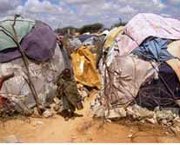
Not only do they not have food and water, but their temporary shelters are inadequate. "They've just pulled clothing out of garbage bins [and] put them over sticks just to make a home."

Most of those affected by the drought are herdsman, and most of their cattle have died. Zook describes one man's desperation: "His last cow died. It was so skinny it had no meat on it to eat. So he took the hide into town to sell it for $2 to get a little bit of food for his family."

Ten containers full of food have been donated to GAiN USA's efforts. One should arrive in country any day. Funding for two others has already been provided. Zook says, "We'd like to be able to send the other seven which includes about 1.7 or 1.8 million meals. But unless we're able to receive the funding for that, we're not going to be able to send it. The exciting thing is that  it only costs 10 cents a meal to send and distribute a meal."

As GAiN provides food, water, and medicine, they're able to answer the most popular question: "Why are you doing this for us?" Zook says their reply is: "'We're doing this because God loves us, and we believe God wants to demonstrate His love to you also through this practical means.' So it opens up incredible opportunities to talk about the love of God."
As people turn to Christ, GAiN ministry partners are there to do discipleship work.

Zook says this is a pivotal time for the Horn of Africa and the Church globally. "Unless the church stands up, unless we as believers stand up and help provide, many people unfortunately will not only go hungry but will die without know that God loves them and wants to have a personal relationship with them."

You gift of $100 will provide 1,000 meals. To give your generous donation, click here.

Wednesday, July 27, 2011

MAF Preparing for Famine Relief Flights

MAF is gearing up to help famine
 relief efforts in Africa. (MAF file
 photo by Marjan Companjen.)

Kenya (MNN) ― An airplane from the Mission Aviation Fellowship (MAF) program in South Africa is flying to Kenya to reinforce the mission organization's response to the famine in the Horn of Africa.

In times of crisis, the Christian relief agency provides flight, communications, and logistics services. Over the past week, MAF has flown leaders from relief and mission organizations, as well as ambassadors from several countries, into the Dadaab refugee camp in Kenya to assess the situation.

MAF is also experiencing increasing demand for flights into South Sudan following the country's independence earlier this month.

"MAF is in contact with a number of relief organizations working in the area," said John Woodberry, MAF manager of disaster response and security. "We are ramping-up our capacity to respond should the need for relief flights continue to grow."

With this additional plane, MAF will have seven aircraft in Kenya. To maximize flight capacity, MAF crews have been working into the night so that planes are ready to depart early each morning.

On Wednesday, the United Nations declared a famine in parts of southern Somalia. Across the region, 11 million people are facing a hunger crisis caused by several years of severe drought.

Mission Aviation Fellowship (www.maf.org) is a family of organizations with a singular mission: to share the love of Jesus through aviation and technology so that isolated people may be physically and spiritually transformed. Serving in 32 countries with more than 140 planes, MAF supports the efforts of some 1,500 Christian and relief organizations.

A significant part of this global network, MAF-US is headquartered in Nampa, Idaho. In addition to its aviation services, MAF-US also provides communication systems and learning technologies to share the Gospel and improve the quality of life in remote areas of Africa, Asia, Eurasia and Latin America.

Tuesday, July 26, 2011

Ethiopian church poised to help drought victims

Ethiopia (MNN) ― More than 10 million people are being affected by the worst drought in 60 years in the Horn of Africa. The U.N. is now calling the situation a famine.

Some of the hardest-hit areas include Ethiopia and Somalia. Steve Wile, Canada President of WorldServe Ministries, puts it in perspective. "In this particular area, there are likely five million people who are living in a food insecure area. They're in an emergency situation, or they're in a crisis situation."

The local church wants to be involved, says Wile. "It's primarily a Muslim area. Our partner has a lot of churches in the area, but they are certainly a minority in a Muslim majority area."

However, these are nominal Muslims, says Wile. "We don't see a lot of the radical Islam fundamentalists in the area, so the people are open to spiritual conversation and are interested in talking about the God of the Christians."

As the drought continues to worsen, Wile says, "What the church wants to do is make the local church the hub, then to reach out to meet the needs in the community. They want to provide food [and water] in the context of their neighborhood. They want to be a witness for Christ."

According to Wile, that's the main focus of the church. "Our partners are so committed to sharing the love of Christ. In some ways, we can be put to shame because of the commitment they have to share the Gospel."
The goal is to make the church more influential and relevant in the community, giving them a platform to share the hope of Christ.

Wile says they can't do it on their own: they don't have the money. "We're looking to raise funds so that the church can provide the resources."

Wednesday, July 20, 2011

Drought in Africa's Horn Getting Worse

Drought is affecting more than 10
 million people in the Horn of Africa.
Kenya (MNN) ― The President of Somalia has declared famine in his country as the drought of 2011 is affecting Somalia, Djibouti, Ethiopia, Kenya, and Uganda, and it's getting worse. Reports suggest up to 11 million people are already affected by the lack of food and water brought on by this disaster.

President of Medical Teams International Bas Vanderzalm says, "Over 750,000 people have had to flee from their homes and are now living in refugee camps and in shelters along the borders. They have no other choice. If they had stayed in their homes, they would have died."

Vanderzalm says the condition of these refugees is critical. "About 50% of the children are acutely malnourished. The rate of death of these children is now three to six times higher than the year before."

While Mission Network News has talked about this drought already, it's yet to hit the international media, says Vanderzalm. He says this could be a catastrophe. "When there are droughts like that in that area, crops fail, cattle die, and people have no choice but to move because there's no food and no water."

Medical Teams International is working through their Christian partners in the region. "They are beginning to provide food and other kinds of assistance," says Vanderzalm. "But they have asked us to help send in medical volunteers and teams."

Medical help is vital, reports Vanderzalm. "When they live in these temporary shelters and camps, because they are already malnourished, they are very sensitive to other diseases. So there have been outbreaks of measles and other diseases that have killed children."

While Medical Teams is providing for their physical needs, Vanderzalm says they also are doing more. "This truly is an opportunity to show people that God loves them and sometimes the needs of the heart can not only be met by physical assistance. Truly what they need is to turn their hearts and lives to Christ."

The needs are great for Medical Teams. Vanderzalm says prayer is needed for those who are suffering and responding. $35 provides medicine for an entire family. Also needed are "medical specialists -- physicians, nurses, and emergency medical workers. It's important that we have people with experience working in this setting."