Showing posts with label world council of churches. Show all posts

Friday, December 9, 2011

Indonesian churches renew their commitment to cooperation

“The World Council of Churches is not just an organisation in Geneva. We are the WCC” was the sentiment expressed by Indonesian WCC member churches at a seminar in Bali recently.
The swiftly changing ecumenical landscape and the need to maintain good communications prompted the meeting at which representatives of Indonesian member churches and regional partners came together with WCC staff to reflect, discuss, share and celebrate.
Church leaders from 22 WCC member churches in Indonesia and East Timor were present along with representatives from the Christian Conference of Asia (CCA) and the Communion of Churches in Indonesia (PGI). Funding for the meeting was an exercise in sharing as accommodations were offered by Protestant Christian Church in Bali (GBKP) and travel and meeting costs were shared among the participants with special additional sponsorship from Kerk in Actie.
The seminar started with fellowship and celebration at the 80th anniversary of the GBKP. Participants travelled to the Christian village of Blimbingsari for the anniversary worship service and public celebrations, including traditional Balinese dance and drum performances.
The remainder of the programme took place in Dhyana Pura and focused on key concerns identified by the group. Reflection and analysis of past ways of inter-relating were combined with creative brain-storming on ways to proceed more effectively in the future.
Church leaders spent time considering ways to creatively contribute to the work of the WCC above and beyond annual financial contributions, though they did emphasize the importance of this vital exercise in stewardship as a sign of continuing commitment.
The church representatives spoke of the challenges of staying ecumenically active on many different levels and emphasised the need to re-energise efforts and reaffirm partnerships to face future challenges together.
“Due to the changing ecumenical priorities, a constructive dialogue among member churches is crucial,” said Caroline Hennessy, WCC fund development officer. “And, as always, the WCC can learn and gain much from a meaningful exposure and sharing in partnership with every member church.”
“Annual ecumenical formation seminars for funding partners have proved effective in strengthening relationships and communications,” she said.
“This seminar involving new staff and leadership of WCC member churches is highly rewarding as an exercise in relationship, partnership and an essential communications tool. Hopefully it can be a model that will be replicated in other areas of the WCC.”
In a final statement produced at the end of the seminar, the churches proclaimed, “We renew our determination to return to the common commitment in the ecumenical movement as a form of reflection of church faith, to optimise the church response towards the problems being faced by the world today.”
The statement went on to say, “In relation to this we are determined to support programmes and services of the ecumenical bodies, global, regional and national (WCC, CCA, PGI), as ecumenical institutions which we ourselves helped shape.”
The seminar also provided an overview of the ecumenical movement in today’s world, reflecting on the specific role of the WCC and upcoming events, particularly the 10th Assembly of the WCC set for Busan, Korea in 2013.
The church leaders said they are “looking forward to a strong and positive participation” in the assembly in Korea.

Wednesday, December 7, 2011

Justice is at the heart of reappraising migration challenges

Participants including migration activists, leaders of migrant churches and representatives of ecumenical organisations from Africa, Europe and the Middle East have been seeking an ecumenical response to migration at a World Council of Churches (WCC) conference in Beirut, Lebanon.
They have been addressing cross-cutting issues of global migration, which are causing appalling situations for the displaced communities and posing numerous challenges to which churches must respond from an ethical view point.
“The Arab uprising has made the question ‘Who is my neighbour’, theme of this conference, even more significant,” said Seta Hadeshian, director of the Diakonia and Social Justice desk of the Middle East Council of Churches. “For churches this theological question has deep social, political and economic implications.”
“The answer to this question lies in positive dialogue. As Christians we are faced with similar challenges, created by the political turmoil and uncertainty in the Middle East, as are people of other faiths, despite of our different contexts,” she added.
Participants also stressed the topic “reframing the rhetoric of migration”. In a European setting, Dr Gerrit Noort, director of Netherlands Mission Council said, “churches need to accept and promote diversity, which is an outcome of the multi-cultural realities of our region. By engaging in debate we also need to address divisions between the churches in order to create more coherent communities.”
Sydia Nduna, WCC programme executive for Migration and Social Justice also emphasised the significance of churches supporting migrant communities.
“The mandate of finding an ecumenical response to the issues of migration has a special urgency and relevance to us as Christians today. In our meeting in Beirut, I hope that together we will be able to bridge the gaps based on different and unique political contexts of the regions,” she said.
The Global Ecumenical Network on Migration conference is organised by the WCC Just and Inclusive Communities programme, in collaboration with the Middle East Council of Churches, All Africa Conference of Churches and Churches’ Commission for Migrants in Europe.
The conference ends on 7 December 2011 at the Near East School of Theology in Beirut, and is being followed from 8 to 9 December by a working group meeting to prepare a theological statement on migration to be shared at the upcoming 10th Assembly of the WCC, which will take place at Busan, Korea in 2013.
[Ekk/3]

WCC workshop explores 'transformative masculinities'

Participants of WCC workshop
 “From Hegemony to Partnership” in Havana, Cuba

Violence against women is endemic both in conflict zones and so called peaceful situations.
According to a study conducted by the University of Lausanne, in Switzerland, more than 26 per cent of women there experience physical violence throughout their adult life. In a country of a similar size but with fewer economic opportunities such as the Dominican Republic, every 36 hours a woman is killed by her partner or husband.
This culture of violence was strongly challenged in a World Council of Churches (WCC) workshop on “transformative masculinities” focusing on a Caribbean situation.
The workshop took place last month in Havana, Cuba, addressing the theme “From Hegemony to Partnership”, and was organised by the WCC programme of Women in Church and Society, in collaboration with the Christian Institute of Gender Studies (ICG) of Cuba and the Caribbean and North America Council for Mission (CANACOM).
Around eighteen church participants from the Dominican Republic, Guyana, Trinidad and Tobago, Puerto Rico, Jamaica, Cuba and Curacao attended the workshop.
Together they made a concrete analysis on how churches can be engaged in awareness raising about gender issues, and counter stereotyping of women and men.
The Rev Dr Ofelia Ortega Suárez, WCC president for the Caribbean and Latin America, shared the importance of including gender perspectives in the educational system for pastors. She stressed that silence of the churches reinforces situations of violence against women.
For Dr Fulata Lusungu Moyo, WCC programme executive for Women in Church and Society, this workshop provided a unique space for churches in the Caribbean region to identify existing resources that lead to deconstructing hegemonic masculinities of violence.
“It is crucial to reconstruct transformative masculinities, which lead to mutual partnership for an environment of justice and peace. Therefore, the experience in the Caribbean will be contextualised by other regions, since every society has its own ways of how feminine and masculine identities are constructed and understood,” said Moyo.
To unravel various forms of masculinity from a faith perspective, the gender training manual Created in God’s Image: From Hegemony to Partnership was introduced. The manual was jointly published by the WCC and the World Communion of Reformed Churches in 2010, and is being translated into French and Spanish.
The manual was aimed at developing an understanding that gender diversity does not necessarily lead to a relationship of domination. It encourages the hegemonic gender paradigms in Christian history to be questioned. It also serves as a training tool to build communities of women and men, ensuring gender justice.
The key facilitators for the workshop were Dr Isabel Moya Richards and Julio César González Pagés, who are scholars of communications and anthropology. According to them even after a significant historical change, such as the Cuban revolution, the society continues to reproduce conservative expressions of masculinity and femininity.
Such expressions, they said, are tangible in the use of sexist language and the objectification of women’s bodies by the commercial media, which emphasizes “macho” attitudes as the only possible expression of masculinity.
Changing the understanding of what it takes to be a man and a woman, acknowledging that both are made in the image of God, can be challenging. This is especially important in the face of contradictory messages of violence that we receive from media and dominant social behaviours.
There are significant efforts to be taken into consideration, such as the work of the Evangelical Seminary in Matanzas, Cuba, where gender is a transversal subject. This information was presented by Dr Reinerio Arce Valentín, the director of the seminary.
The workshop received consistent support from the Stichting Rotterdam Fund, along with the strong involvement of Moraima González, coordinator of ICG.
[Ekk/3]

Monday, November 28, 2011

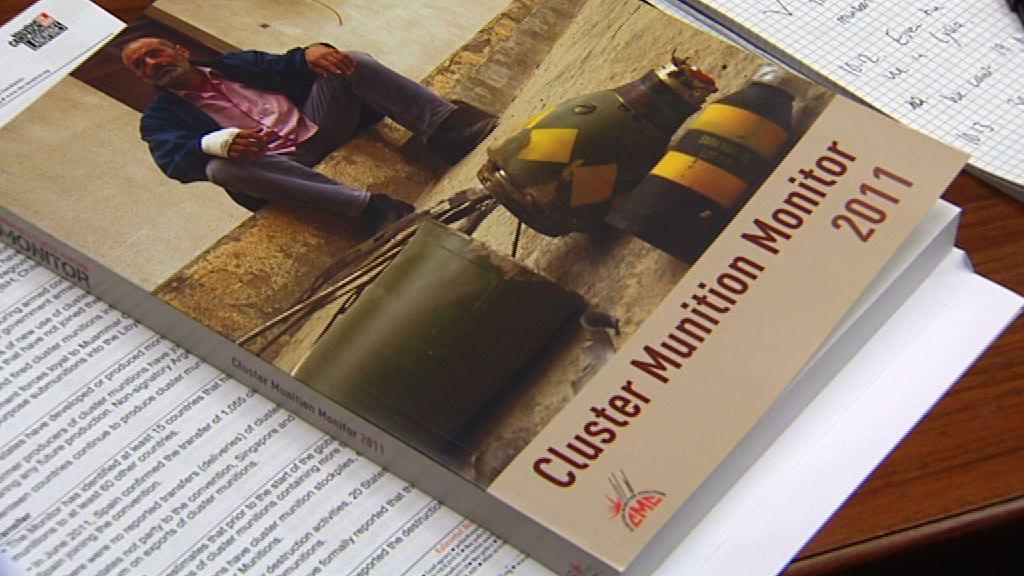
Disarmament advocates hail derailing of flawed cluster bomb accord

Religious leaders and disarmament campaigners have hailed the decision by 50 countries to derail a proposal backed by the United States, Russia, China, India, and Israel to create a new global accord on cluster bombs, because it did not meet humanitarian concerns.
The proposal, put forth during the Fourth Review Conference of the Convention on Conventional Weapons (CCW), which concluded on 25 November 2011, called for the destruction of all cluster munitions produced before 1980, but would have allowed the use of munitions with a failure rate of one percent or less, as well as those with only one safeguard mechanism.
For background to the concerns, see: http://www.ekklesia.co.uk/node/15772
Meanwhile, pressure from business people and different views of the crisis after the 11 March 2011 earthquake, tsunami and nuclear power plant disaster has caused Japanese Catholic bishops to delay an anti-nuclear message for six months, according to a church official.
"Immediately after the earthquake disaster, there was, of course, a voice within the church that we should express our concrete position to abolish nuclear power plants," said Noriko Hiruma, a Japanese Roman Catholic sister of the Mercedarian Missionaries of Berriz who is serving as the secretariat staff of the Japan Catholic Council for Justice and Peace, in an e-mail to ENInews.
But now the bishops think it is wise to hold further discussions, following intense debate within and beyond religious circles.
[With acknowledgements to ENInews. ENInews, formerly Ecumenical News International, is jointly sponsored by the World Council of Churches, the Lutheran World Federation, the World Communion of Reformed Churches and the Conference of European Churches.]
[Ekk/3]

Tuesday, November 15, 2011

Prison conditions in Sierra Leone described as 'deplorable'

Pademba Road Prison in Freetown, Sierra Leone

“We are packed inside prison walls like sardines in a plastic carton”, says 22 year old Ibrahim, who has been imprisoned at the Pademba Road Prison in Freetown, Sierra Leone since September.
Ibrahim made his comments to members of a World Council of Churches (WCC) delegation, which visited Central Prison in recently, as part of a human rights training programme in Sierra Leone.
His honest account about living conditions in prison was echoed by fellow inmates, who clapped their hands to support him while he spoke. These prisoners gathered in an open space inside the prison compound where they spoke to the WCC delegation along with prison officials.
The delegation included human rights defenders from Togo, Ivory Coast, Libreria, Guinea and Sierra Leone, along with WCC staff.
Ibrahim was jailed for the offence of driving on an unauthorised route. He cannot afford a lawyer nor arrange for his bail. He is not the only one in this situation. Several prisoners shared stories of their imprisonment, complaining about the living conditions in the prison.
Fifteen prisoners, who were allowed to speak in front of the officers, said they had no opportunity for a trial. Most of them were imprisoned for months and years, and had no means of affording legal aid. Several were in for petty crimes, which could have been settled by the police, or through traditional African ways of dispute settlement.
The WCC delegation also visited prison cells. They found conditions inside the cells to be very poor and in violation of basic human rights. They witnessed prisoners crammed into dirty cells, exposed to infections, with inadequate food, drinking water and sanitary facilities. There was no bedding provided for most of the prisoners, and many had to sleep on the floor.
The Central Prison, which has the capacity to accommodate around 350 prisoners, was packed with 1,243 prisoners. Out of this number, 362 are on remand awaiting court trial, two were sentenced to life imprisonment, while the rest are imprisoned without trial awaiting prosecution.
Ms Aaffi Alaffman, a member of the WCC delegation, who works to provide free legal aid to such prisoners, said, “Anyone accused of a certain crime should be brought before a court of law within a time limit, and the trial should be arranged. However there is a serious dearth of such arrangements in our legal system”.
Alaffman’s concern is significant, as the accused when held in custody pending trial, are entitled to treatment in accordance with the United Nations Minimum Standard Rules of Detention.
“Fair treatment for a prisoner is denied in Sierra Leone’s present situation”, lamented another legal practitioner, Ms Dauie Cole, who facilitated the WCC delegation’s interactions with the prisoners.
Prison conditions in Sierra Leone reflect gaps in standard judicial mechanisms. The country has inherited a colonial legal system which is outdated, and this impacts its legal system in many ways. This is one reason why the government is unable to guarantee protection of human rights. The convicted people are living in conditions which are neither in line with the national laws nor consistent with international standards.
The delegation stressed the government’s obligation to protect prisoners from “cruel, inhuman and degrading treatment”. The prisoners did not complain about torture inside the prison.
The WCC delegation expressed deep concern over the situation. They recalled recommendations made during the Universal Periodic Review of Sierra Leone at the United Nations Human Rights Council in 2011, urging the government to improve conditions in prisons and detention centres, creating accessibility to legal representation, strengthening legal aid programmes, and diminishing lengthy periods of detention without trial.
----------

WCC supports a truth commission in Brazil

Brazilian minister for human rights, Maria do Rosário

The Moderator of the Central Committee of the World Council of Churches has met with the Brazilian minister for human rights, Maria do Rosário, at her office in Brasília.
The main item on the agenda was the support of the WCC for the implementation of a truth commission in the country, expressed by the Rev Dr Walter Altmann on behalf of the world churches body.
The WCC has extensive experience of such commissions, and during a public act held in São Paulo on 14 June 2011, the ecumenical body handed over to Brazil’s Attorney General Roberto Gurgel, documents related to the project 'Brasil: Nunca Mais!' (BNM), which had been kept safe at the WCC library archives in Geneva since the 1970s.
The BNM project is a wide-ranging record of abuses perpetrated by the military dictatorship in Brazil from the 1960s to the 1980s.
At the hearing, Maria do Rosário was accompanied by her advisor, Dr Nadine Borges, who is in charge of legal affairs, and the Rev Marga Ströher, a Lutheran pastor who currently works at the Special Secretariat for Human Rights, which has ministerial status. Ströher is responsible for the Religious Diversity desk at do Rosário’s government ministry.
The minister showed appreciation for the WCC’s work, especially in the area of human rights. Altmann presented a few examples of places around the world where the WCC has played a decisive role in conflict mediation and truth commissions.
Dr Altmann, who was president of the Evangelical Church of Lutheran Confession in Brazil from 2002 to 2010, presented the minister a copy of O Acompanhamento, a book by former WCC staff member the Rev Charles R. Harper. The publication is a compilation of initiatives supported by the WCC to defend human rights in Latin America from the 1970s to the 1990s.
The creation of the truth commission was approved by the Brazilian senate and the measure will soon be signed into law by president Dilma Rousseff, who will appoint seven official members of the commission, as well as 21 advisors.
Nevertheless, terms of reference of the commission contain two provisions which limit the scope of action in its work. The first refers to the extension of a research period from 1946 to 1988 (when the current constitution was adopted), rather than from 1964 to 1985, the period of military dictatorship. The other provision is that the commission has no authority to bring cases to the court. Such a provision has been strongly criticised by several civil society organisations.
Dr Altmann evaluated the meeting as positive, both with the minister and other cabinet members.
He declared: “The WCC and the Brazilian ecumenical movement may have a kairos for a new contribution in the field of human rights in Brazil. The country has progressed in many areas, economically and socially, but is still very much behind neighbouring countries in disclosing the tragic events of our past during the military dictatorship.”
“On the basis of past experience, particularly with the project BNM, we may have an opportunity to contribute significantly to a process of searching for truth in Brazil. The commission on truth is an opportunity and a significant step in the field of human rights,” he added.
[Ekk/3]

Tuesday, September 13, 2011

Churches around the world call for renewed commitment to the environment


At a time when the impact of climate change remains a major global concern, churches around the world are calling for a renewed commitment towards the environment and ecosystems.
During September and October 2011, churches and organisations from Germany to Australia, India to South Africa, the Pacific to North America, are observing the “Time for Creation”, a month-long celebration of creation and demonstration of concern for climate justice.
From 1 September to 4 October the World Council of Churches (WCC) is calling upon Christians and organisations to observe this time to renew their commitment towards the environment and eco-systems.
A “Time for Creation” is part of climate justice initiatives by the WCC, through which the churches and faith networks are stressing the ethical and spiritual aspect in debate on environmental issues. To transform this perspective into action, the WCC has been an advocate at all Conference of Parties (COP) of the UN Framework Convention on Climate Change. The next meeting is in December in Durban, South Africa.
Both starting and end dates of “Time for Creation” are based on the concerns of creation in the Western and Eastern traditions of Christianity. To signify responsibility for nature, the late Ecumenical Patriarch Dimitrios declared 1 September a day of prayer for the environment in 1989.
Also the Orthodox church year starts on 1 September, commemorating how God created the world, while 4 October is commemorated by Roman Catholics and other churches as the feast of Francis of Assisi, known as the patron saint of the environment.
Oeku, an ecumenical organisation working for environmental issues in Switzerland, recently launched “Time of Creation” as part of its 25th anniversary celebrations. Oeku has been celebrating this initiative since 1993, focusing this time on the International Year of Forests. Protestant, Orthodox, Old Catholic and Roman Catholic parishes in Switzerland joined different programmes held by Oeku.
The National Council of Churches in India (NCCI) also started a campaign “Remembering the Creator and Creation”. NCCI member churches are now organising special prayers, homilies, vigils and activities addressing environmental concerns.
Since the United Nations has announced 2011 as the International Year of Forests, in its campaign NCCI emphasises the “central role of people in the conservation, sustainable management and development of our world’s forests”.
A nationwide celebration of “Time for Creation” was also initiated by several churches in Germany. This included liturgical celebrations, sermons and lectures by public figures and events like “Listening to the silence”, comprised of visits to the nature parks.
“God has given humankind responsibility for Creation until the time when God will fulfil his creation of a new heaven and a new earth”, WCC Central Committee member Fernando Enns said in his sermon during recent “Time for Creation” celebrations in Berlin. Offerings at the ecumenical prayer service in Berlin went towards the training programme “Youth for Eco-Justice”.
Leading up to the UN climate negotiations (COP 17) in Durban, South Africa, in collaboration with the Lutheran World Federation, the WCC is bringing young Christians together for this training programme in the latter part of 2011. Other advocacy initiatives with churches, ecumenical and faith organisations hope to make a strong presence at COP 17.
By celebrating “Time for Creation” the WCC programme executive on climate change, Dr Guillermo Kerber, hopes for a better contribution towards eco-justice. “WCC’s policy on climate change reflects the ecumenical understanding by stating ecological, economic, cultural, and political dimensions of the climate change crisis, calling for a holistic approach and stressing ethical and biblical perspectives, that climate change is a matter of justice,” he says.
* WCC activities promoting eco-justice:
http://www.oikoumene.org/eco-justice
* WCC climate justice campaign: http://www.oikoumene.org/climatechange
* 'Time for Creation' on Facebook: https://www.facebook.com/event.php?eid=191171314275215
[Ekk/3]

Call for solidarity with poor at meeting of civic, political and religious leaders


A call for solidarity with the poor was delivered to a gathering of religious, political and civil society leaders from all over the world by one of the presidents of the World Council of Churches (WCC).
The meeting on the theme 'Bound to Live Together: Religions and Cultures in Dialogue' has been taking place from 11-13 September 2011 in Munich, Germany.
The Catholic lay community of Sant'Egidio has convened the gathering in commemoration of the 10th anniversary of the terrorist attacks of 11 September 2001 in New York. Among the speakers are many leading figures of the ecumenical movement, including Dame Mary Tanner, WCC president for Europe.
Tanner was part of a panel on “Christian Unity, Love of the Poor” that also saw the participation of Patriarch Daniel of the Romanian Orthodox Church, Metropolitan Filaret of the Russian Orthodox Church, Cardinal Kurt Koch, president of the Pontifical Council for Christian Unity, Bishop Munib Younan, president of the Lutheran World Federation and Fr Marco Gnavi of the community of Sant'Egidio.
Patriarch Daniel expressed the need for “a regional spiritual and social ecumenism” which would not be based on new theories and concepts, but on the ongoing tradition of the One Church, the lives of the saints and the example of the gospel.
Metropolitan Filaret focused on the spiritual and social roots of the current financial crisis. Drawing on the social concept developed by the Moscow Patriarchate, he explained that wealth is a gift of God intended to enable the recipients to serve the poor.
When misused as a purely personal possession, wealth creates instability and disorder leading to economic crisis, he added. This condition begins as a spiritual crisis that infects society and leaves the whole economy unhealthy.
Dr Mary Tanner spoke on the link between unity among Christians and the responsibility to care for the poor. Tanner, a long-standing member and former Moderator of the WCC Faith and Order commission, recalled her encounter with marginalised people in Lima, Peru in 1982 during a meeting of the Faith and Order plenary commission.
This experience led her to understand the deep connection between sacramental unity and agreement in one apostolic faith, on the one hand, and Christians’ common service and diakonia on behalf of those who are in need.
Bishop Munib Younan, of the Evangelical Lutheran Church of Jordan and the Holy Land, called the churches to consider together ways of collaboration in support of the poor.
While presenting the work of ACT Alliance as an organisation that brings together Protestants and Orthodox in common humanitarian service and advocacy, he emphasized the need to use more efficiently the resources that churches have at their disposal, developing more joint projects. Younan added, “It is not our name that should be glorified, but the name of Christ.”
The meeting started on Sunday with mass celebrated by Cardinal Reinhard Marx, Archbishop of Munich, in the presence of representatives of many Christian traditions. The proceedings continued with a ceremony in memory of the victims of 11 September 2001.
At the ceremony, Marx said that the United States and the whole of western civilisation as well as the world community, which he defined as the ultimate target of the attacks, should go beyond direct defence against violence and find answers that build peace and teach us to live together in one world.
The participants were also addressed by German Chancellor Angela Merkel who called on all religious people to pray for financial and ecological sustainability as the world deals with the current crises.
The Sant'Egidio community is dedicated to communal prayer, meditation on Scripture, Christian unity, intercultural dialogue, social service and peacemaking.
* Sant'Egidio Community event page: http://www.santegidio.org/index.php?&idLng=1064
[Ekk/3]

Friday, August 12, 2011

WCC will participate in World Youth Day in Madrid


By staff writers
12 Aug 2011
The World Council of Churches is to participate in the World Youth Day (WYD) in Madrid, Spain, 16-21 August 2011, in the presence of Pope Benedict XVI.
The theme of the 2011 WYD is “Rooted and Built Up in Jesus Christ, Firm in the Faith” (Colossians 2.7, New Testament).
The WCC says its move is "consistent with our commitment to strengthen long-standing relations with the Roman Catholic Church and to foster youth involvement in the one ecumenical movement."
Three members of the Echos Commission on Youth in the Ecumenical Movement, the WCC youth body, were graciously invited by the International Young Catholic Students (IYCS) to join their official delegation. A IYCS delegate represents Roman Catholic youth on the Echos Commission.
Diana Fernandes Dos Santos (Brazil), moderator of the Echos Commission, Mikael Giødesen (Denmark) and Nikos Kosmidis (Greece) will participate in a panel discussion on “Youth and the Search for Christian Unity”.
The event is a joint initiative of the International Young Catholic Students (IYCS), the International Movement of Catholic Students (IMCS) Pax Romana, the Juventud Estudiante Catolica (JEC), and the Echos Commission.
Echos member Kosmidis will be part of a group of 50 young people who will accompany Benedict XVI throughout a solemn vigil on Saturday 20 June. The vigil, which will take place at the Cuatro Vientos aerodrome, is expected to bring together hundreds of thousands of pilgrims. An address to the participants is planned by Pope Benedict.
World Youth Day is the largest youth-oriented event within the Roman Catholic Church. It was initiated by Pope John Paul II in 1985 and since that time has gathered millions of young people from all over the world, regardless of their religious convictions.
Previous cities that hosted a WYD include Toronto in 2002 (800,000 participants), Cologne in 2005 (1,200,000 participants) and Sydney in 2008 (400,000 participants).