Showing posts with label media. Show all posts

Friday, December 16, 2011

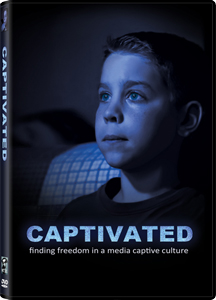
New Documentary 'Captivated' Addresses Media and Technology and the Growing Need for Discernment

MT. CARROLL, Ill., Dec. 16, 2011 /Christian Newswire/ -- "Everywhere we go, we are surrounded by screens. Have we entered a techno utopia or a virtual prison?" Producer and co-director, Phillip Telfer, asks this and other pertinent questions in the new documentary "Captivated: Finding Freedom in a Media Captive Culture."

Everyone would agree that we live in a media-saturated society, but how many consider the possibility that they have become captives? People of all ages are being held hostage by television, video games, social networks, movies, texting, tweeting, and more. They have become infatuated with the things of the world and distracted from God, from eternity, and from deeper relationships with each other.

This feature-length documentary is not anti-media or anti-technology, but raises concerns about the unchecked enthusiasm regarding media, and highlights the overwhelming evidence of growing problems on multiple fronts. It addresses the potential physical, moral, spiritual, mental, and emotional impact of today's media and technology when consumed or used without discretion. 

This film has an outstanding lineup of interviews featuring Ray Comfort, Bob Waliszewski, Dr. Ted Baehr, Dr. Jeff Myers, Kerby Anderson, Kevin Swanson, Dr. David Walsh, Al Menconi, Dr. Dimitri Christakis, Dick Rolfe, Phil Chalmers, Professor Mark Bauerlein, Maggie Jackson, and more. 

What really makes this movie extraordinary is the personal stories of everyday people who have found freedom from their former bondage to media and technology. Nick, an auto mechanic, shares about his former addiction to NASCAR and NFL. Corey, a young skateboarder, talks about his experience of going on a media fast. Neysa candidly admits her struggle with Farmville on Facebook, and several other stories bring this down to earth for the average viewer. 

This documentary is a production of the non-profit organization Media Talk 101, founded by Phillip Telfer. Phillip wrote, produced, and co-directed the documentary with the help of award winning director, Colin Gunn. 

For more information about "Captivated" or to view the trailer visitwww.captivatedthemovie.com. 

Media interested in an interview with Phillip Telfer or interested in receiving a screener copy for review can contact Phillip directly at 815-275-1700 or phillip@mediatalk101.org.

Tuesday, November 29, 2011

On a Christian boycott of Black Friday

Written by TONY WOODLIEF


I’m predisposed to agree with arguments against participating in Black Friday. So I was prepared to nod my head toAiden Enns’s essay in The Washington Post’s On Faith blog, in which he lays out reasons why Christians should avoid today’s madness.
Instead I found myself wondering how many people might be persuaded to take Christianity more seriously if the know-nothings who write under a Christian label would take up some other occupation.
There are plenty of reasons for a Christian not to participate in Black Friday. Most of these reasons are applicable to every human being with a modicum of good sense. If you value your time, for example, you don’t want to squander it in some of the longest lines of the year.
If you value your money, and you’ve been paying attention, you know that retailers are desperate. (Does anyone think it’s a coincidence that you could still smell the sunscreen on people when shopping centers started hanging wreaths and playing pseudo-Christmas jingles?) Which means the longer you hold out, the better deals you can get, unless your loved ones absolutely have to have whatever trinket is exceedingly popular and rare this year.
And they don’t, by the way, which means the power lies in your hands to teach them an important lesson about letting go of what they covet.
Finally, if you have any fashion sense, you know that black is out this fall season, making Black Friday terribly passé. What’s more, there’s no way to congregate with a bunch of sweatpants-wearing, bargain-addled shopping addicts who’ve been up since 4 a.m., and look good. No way.
These are all valid reasons to eschew Black Friday. What is not a valid reason is virtually any of the argumentation offered by Enns. “It’s not that there’s something more important than the economy,” he claims, “it’s that the economy needs to be refashioned.” By this he means we need committees of smart people to address “poor labor conditions, exploitative hiring practices, unfair monopolies, and irresponsible resource extraction.”
History shows that people who don’t really understand markets generally make things worse when they start monkeying around with them in the name of “social justice.” But there’s a deeper problem here, which is Enns’s tacit assertion that there is nothing more important than the economy. This is not uncommon among those in the social justice wing of Christianity, who are at their hearts first and foremost about economics over faith.
But the real howler is where Enns writes this: “It’s dumb to say it this way, but Jesus was like Gandhi before Gandhi was Gandhi. He came alongside the poor masses and gave them hope because he stood up to the enforcers of empire.”
Here’s a writing tip: If you begin your sentence with, “It’s dumb to say it this way,” that’s a real strong clue that what you’re about to say is, in fact, dumb.
Jesus was no Jewish Cesar Chavez. He didn’t just chose “solidarity,” as Enns asserts, “with people of the lowest ranks,” as at least one centurion and one powerful tax collector can attest. He comes as King, and He overthrows the power of sin and death, not passing economic monopolies and labor injustices. To write about Him otherwise is to cheapen Him, and cheapen Christmas.
So fine, fellow Christians, stay home on Black Friday. Heck, abstain from shopping during the entire Christmas season. But do it not because Jesus wants socialism; do it, if you choose, because Jesus has more important work, with you, me, and our neighbors, than fussing over whether that new spatula we’re about to buy meets a set of Fair Trade standards.

Thursday, August 25, 2011

Young Blogger Rallies Influential Catholics Around New Media Revolution


HUNTINGTON, Ind., Aug. 25, 2011 /Christian Newswire/ -- A 25-year-old part-time blogger and full-time mechanical engineer is convinced that the Catholic Church needs to embrace new media as it did print, radio, and television. If she wants to connect with her flock, Brandon Vogt says, the Church needs to engage the digital revolution.

And some of the Church's most influential shepherds agree. With endorsements from three cardinals, two archbishops, and a Vatican communications official, Vogt has produced a groundbreaking book on technology and faith, which also includes contributions from dozens of other Catholic new media experts.

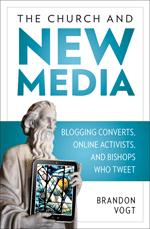
The Church and New Media: Blogging Converts, Online Activists, and Bishops Who Tweet, by Brandon Vogt (Our Sunday Visitor, August 2011, 224 pp), has attracted the enthusiasm of Boston archbishop Cardinal Seán O'Malley, O.F.M. Cap., for instance, who penned the book's Foreword. The cardinal not only endorses the book, but was particularly inspired by one of the contributors, Jennifer Fulwiler, who was led from atheism to Catholicism through friendships and contacts she developed online.

Since young people today are absorbed in new media, O'Malley acknowledges, "the Church doesn't have to change its teachings to reach them -- it simply must deliver the faith to them in a different way." O'Malley began his own blog in 2006 (CardinalSeansBlog.org), and says "young Catholics at the 2008 World Youth Day told me personally they regularly read my blog," while mentioning individual blog posts that made a particular impact. "This confirmed my belief in the immense reach of new media vehicles ... particularly to young Catholics who have grown up with these technologies."

"Though the Church is very comfortable with the broadcast-style of old media, which pushed content outward," says Vogt, "effective new media welcomes response, critique, and conversation. This is what people are drawn to right now - two-way tools, not one-way megaphones."

When Christ commissioned his apostles to "go forth and make disciples of all nations (Matthew 28: 19)," there was a reasonable expectation that they'd use the most modern communication tools to do it.

"Today this means using phones, fiber-optic cables, and wireless lines in place of town criers and courier-camels," says Vogt. The Church and New Media details precisely how new media can reach the ends of the earth like no other evangelistic tool in world history.

The book's 12 contributors are a veritable who's who of Catholic new media experts, including Fr. Robert Barron, Jennifer Fulwiler, and Mark Shea. They explore a range of new media tactics:
  • reaching the unchurched
     
  • sharing spiritual journeys 
     
  • connecting with young adults 
     
  • reading -- and writing -- blogs
     
  • understanding ancient Church tradition 
    podcasting
     
  • digitally defending the teachings of the Church
     
  • new media strategies for dioceses and parishes 
     
  • the Vatican's digital model
     
  • new media activism
     
  • building digital movements.

"I knew this book would better serve the Church if it came from multiple perspectives," Vogt explains. "So I gathered a dozen of the best new media innovators to explain their areas of expertise. This helped the book play more like a symphony than a solo. It made the song much more alluring," he says.

Other prominent endorsers of the book include Cardinal Donald Wuerl, archbishop of Washington; Archbishop Charles Chaput, O.F.M. Cap., archbishop of Denver (who was recently re-assigned to lead the Philadelphia Archdiocese beginning September, 2011); and Archbishop Timothy M. Dolan, archbishop of New York, who wrote the book's Afterword.

Dolan relays an idea that surprises even the most tech-savvy:
"Decades before the dawn of the internet, blogs, YouTube, and social networking (what we now call new media), the Catholic Church was calling for their invention," says Dolan.
It makes one wonder ... How? When?

Dolan reveals that in the Compendium of the Social Doctrine of the Church (2005), the Church says that one of the great moral principles to which society should aspire is to give a voice to as many people as possible. "Gone are the days," Dolan explains, "when an elite group of news anchors, in a space of 30 minutes, are the principle conduit of information to an entire nation or world."

"My friends and family know that I am not a 'techie' by any stretch of the imagination," says Dolan, "and our brave new world of technology and communication can be overwhelming in its complexity. Faced with a technological evolution beyond our personal capacities or preferences, we can opt for old and comfortable patterns of communication, even if they limit our ability to connect in meaningful and effective ways, or ...use new technology for the good, and learn to use it well."

Download and view the entire press kit (PDF and Word). 
 
About Our Sunday Visitor, Inc.
The world's largest English-language Catholic publisher, Our Sunday Visitor serves millions of Catholics globally through its publishing, offertory, and communication services. Established in 1912, Our Sunday Visitor has grown into the largest supplier of offering envelopes, parish and diocesan mailings, books, periodicals, curriculum, address management, and stewardship services. Our Sunday Visitor is a not-for-profit organization, returning a portion of net earnings back to the Catholic community through the Our Sunday Visitor Institute.  For more information, visit 
www.osv.com.